
SEO The foundation of search visibility
The Foundation of:
Search Visibility
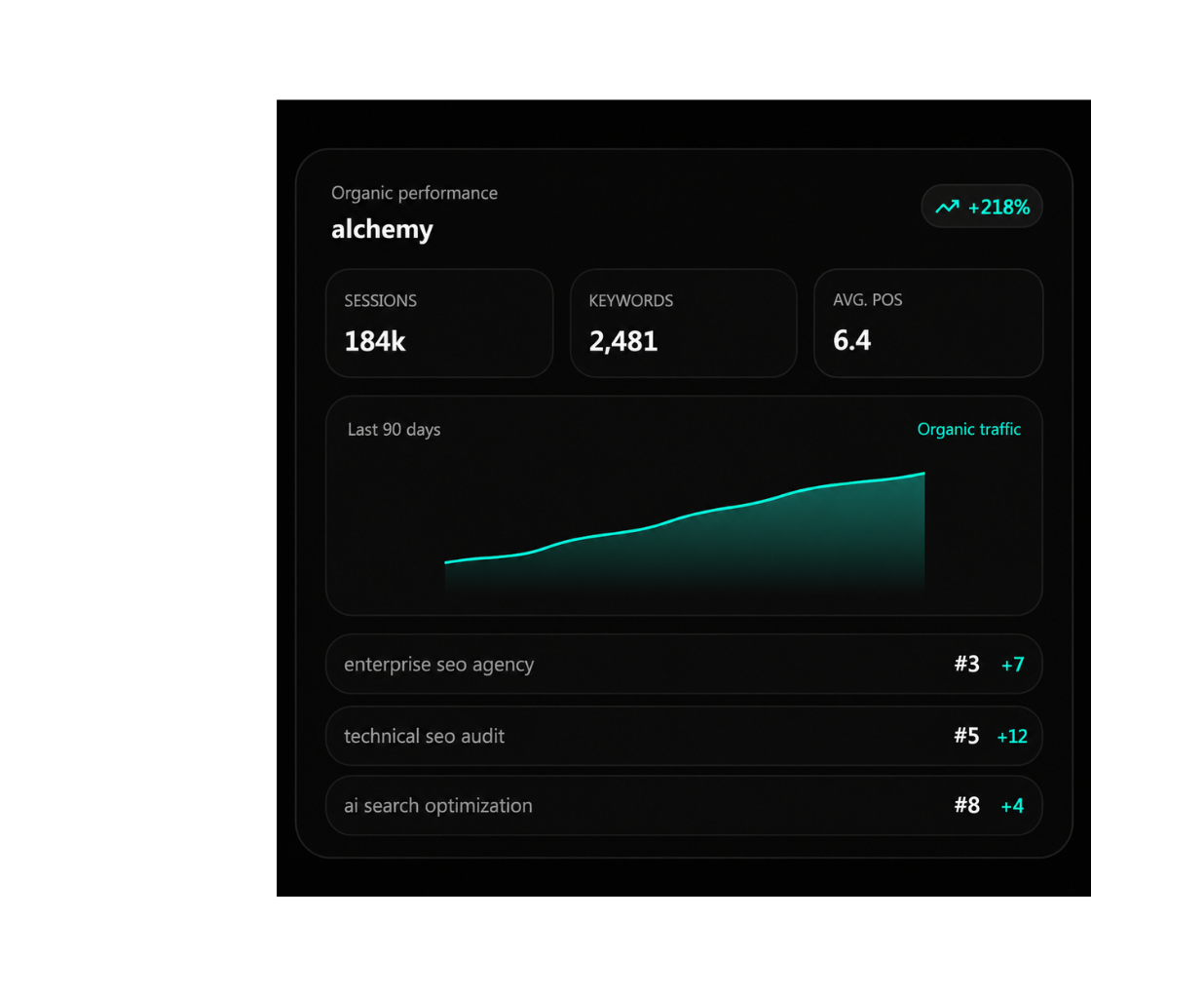
Traditional SEO competes for the ten blue links that drive the majority of website visits and conversions. We build the organic foundation that compounds — no ad spend, no expiration date.
SEO The foundation of search visibility
The Foundation of:
Search Visibility

What Is SEO?
Here’s The Two Sentence Definition:
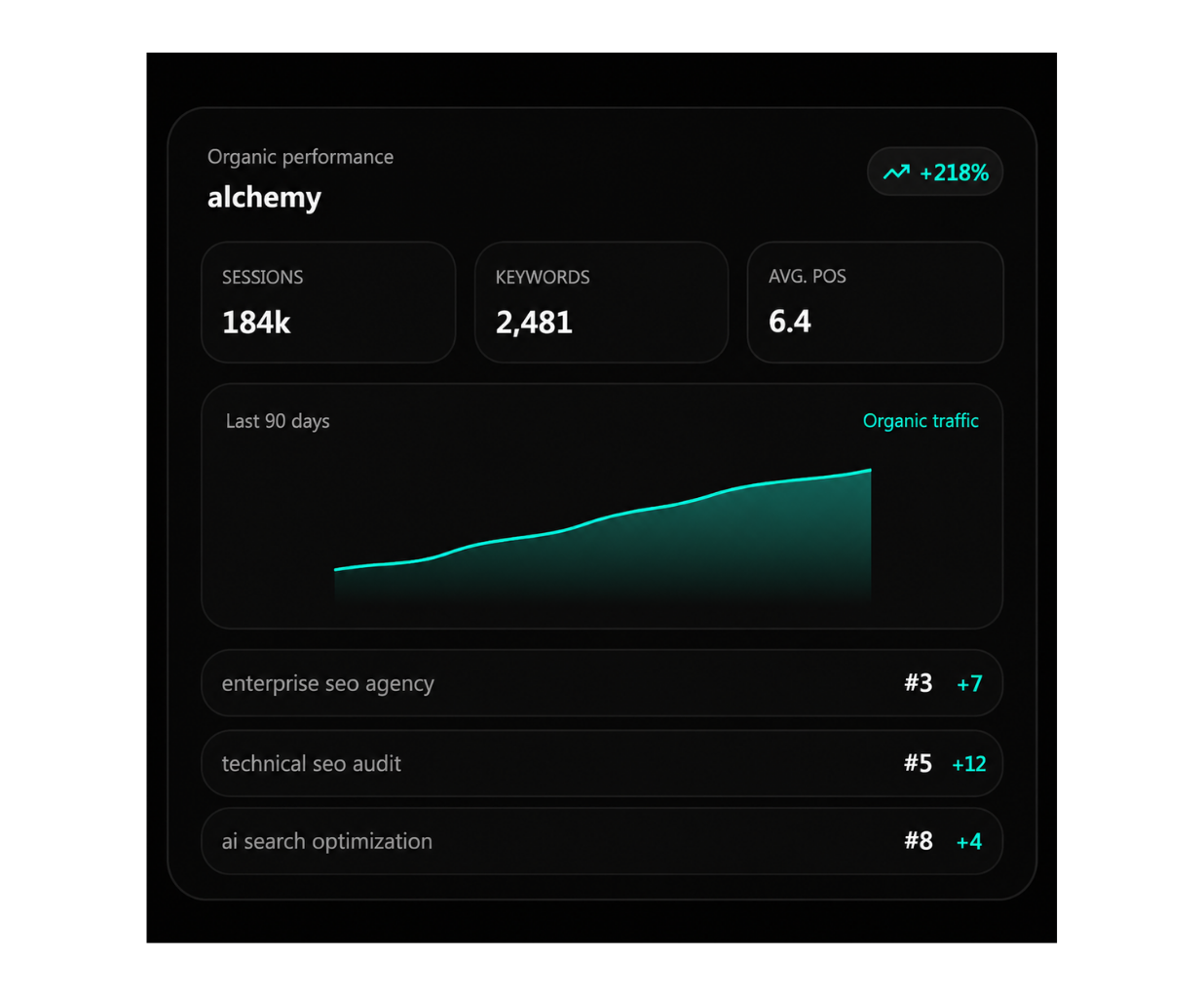
SEO is the practice of optimizing websites and content to rank higher in search engine organic results for targeted keywords and phrases.
Where newer disciplines like AEO target answer boxes and GEO targets AI citations, traditional SEO competes for the ten blue links that appear below the featured snippets and ads — the backbone of search traffic that drives the majority of website visits and conversions.
SEO remains the largest traffic driver for most businesses because organic rankings compound over time, require no ongoing ad spend, and capture users at every stage of the buying journey. While search evolves rapidly, the fundamentals of earning Google’s trust through quality content, technical excellence, and authoritative backlinks remain constant.
What Is AEO?
Here’s The Two Sentence Definition:
SEO is the practice of optimizing websites and content to rank higher in search engine organic results for targeted keywords and phrases.
Where newer disciplines like AEO target answer boxes and GEO targets AI citations, traditional SEO competes for the ten blue links that appear below the featured snippets and ads — the backbone of search traffic that drives the majority of website visits and conversions.
SEO remains the largest traffic driver for most businesses because organic rankings compound over time, require no ongoing ad spend, and capture users at every stage of the buying journey. While search evolves rapidly, the fundamentals of earning Google’s trust through quality content, technical excellence, and authoritative backlinks remain constant.
The Three Surfaces
The Three Pillars of SEO Success

On-Page Optimization
Structuring individual pages to rank for target keywords. This includes title tags, meta descriptions, header hierarchy, keyword placement, internal linking, and content depth. Each page should target a primary keyword and 2–3 related terms.

Technical SEO
Ensures search engines can crawl, index, and understand your website. Site speed, mobile responsiveness, SSL certificates, XML sitemaps, robots.txt files, and structured data markup all impact how well search engines process your content.

Off-Page Authority
Builds your domain’s credibility through backlinks from other reputable websites. Quality backlinks from relevant, high-authority domains signal to Google that your content is trustworthy and valuable enough to reference.
Comparison
How SEO differs from modern search disciplines.
Dimension
Goal:
Traffic Source
Content Strategy
Success Metric
Timeline
Competitive Landscape

Rank in organic results
Click-through required
Keyword-focused
Rankings + traffic
3–6 months
10 ranking positions
AEO/GEO/LSO
Win answer positions
Visibility without clicks
Question-focused
Citations + brand mentions
2–8 weeks
1–3 answer slots
The Framework
The SEO Success Formula
Effective SEO follows a predictable process that builds
authority over time:

Keyword Research
Identifies the terms your customers actually search for. Target a mix of high-volume competitive terms and long-tail phrases with lower competition but higher intent.
Content Creation
Produces comprehensive, original content that thoroughly answers user queries. Longer content (1,500+ words) typically outranks shorter pieces, but depth and usefulness matter more than word count.
On-Page Optimization
Structures each page around one primary keyword. Include the target term in the title tag, H1 header, first paragraph, and naturally throughout the content without keyword stuffing.
Technical Foundation
Ensures fast loading speeds (under 3 seconds), mobile-first design, clean URL structures, and proper internal linking that helps users and search engines navigate your site.
Link Building
Earns backlinks through valuable content, industry relationships, guest posting, and digital PR. One high-quality link from a relevant authority site outweighs dozens of low-quality directory links.
Performance Monitoring
Tracks rankings, organic traffic, click-through rates, and conversions. SEO requires continuous optimization based on performance data and algorithm updates.
We get it
The Advanced Ranking Core® Solution
Combined with our integrated coverage, every search opportunity is captured under one strategy:
ARC handles the complete SEO foundation: comprehensive keyword research, monthly content publication targeting your highest-value terms, technical optimization for speed and crawlability, strategic link building from industry-relevant domains, and continuous performance monitoring with monthly reporting.
Technical optimization
Monthly performance reporting
Comprehensive keyword research
Monthly content publication
Strategic link building
LSO
Local visibility
AEO
Featured snippets
GEO
AI engine citations
LSO
Local visibility
Frequently Asked Questions About SEO
How long does SEO take to work?
Most websites see initial ranking improvements within 3-4 months, with significant traffic gains appearing at 6-12 months. SEO is a compound investment — early efforts build the foundation for exponential growth later. Competitive industries and new domains typically require longer timelines.
What's the difference between SEO and paid search?
SEO targets organic (free) search results and builds long-term visibility that doesn’t require ongoing ad spend. Paid search delivers immediate visibility but stops when you stop paying. Most successful businesses use both: paid search for immediate results while SEO builds sustainable traffic.
How many keywords should I target?
Start with 10-20 primary keywords that represent your core services, then expand to 50-100+ long-tail variations. Each page should target one primary keyword plus 2-3 related terms. Avoid targeting the same keyword on multiple pages, which creates internal competition.
Do I need to update old content?
Yes. Google favors fresh, updated content. Refresh your top-performing pages quarterly with new information, updated statistics, and expanded sections. Content updates often trigger ranking improvements for existing pages.
What's the relationship between SEO and AEO/GEO/LSO?
SEO provides the foundation that makes other disciplines possible. Pages that rank well organically are more likely to win featured snippets (AEO), get cited by AI engines (GEO), and appear in local results (LSO). Modern search strategies layer all four disciplines for complete visibility.